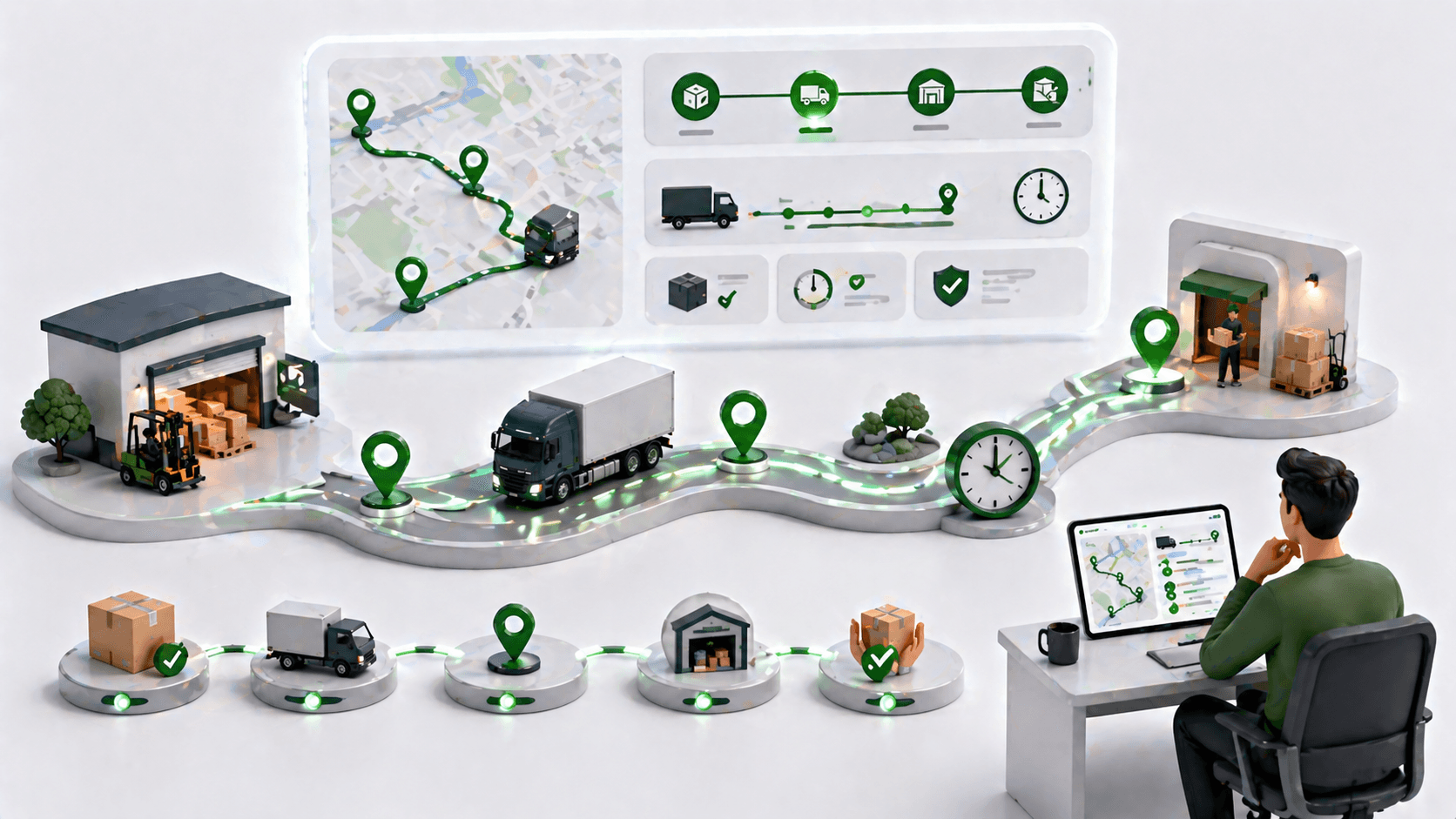
Coordination problems slow down logistics platforms because connecting participants is only part of the job. Once parties are visible to each other, the harder challenge begins: getting information, expectations, availability, and process flow to align clearly enough for fast, reliable decisions. When that coordination layer is weak, the platform may create access without creating efficiency.
Why logistics is not just a visibility problem
At first glance, logistics platforms often appear to be about exposure:
- finding transport capacity
- surfacing loads
- making carriers visible
- connecting market participants
That matters, but it is not enough.
In logistics, real value depends on whether the connection can move smoothly from visibility to usable coordination. If the process becomes fragmented after the initial connection, platform value drops quickly.
What coordination problems usually look like
Coordination problems in logistics often show up as:
- fragmented information
- unclear availability
- delayed decisions
- repeated clarification
- weak status visibility
- misaligned expectations
- process ambiguity
These are not small usability issues. They are structural barriers to scale.
Why fragmented coordination becomes expensive
When coordination is weak, users spend more time validating basic facts. That creates unnecessary effort across both sides of the market.
Instead of moving forward, participants may need to repeatedly confirm:
- current status
- actual readiness
- timing
- suitability
- next actions
- changed conditions
This slows decisions, increases operational load, and reduces trust in the platform itself.
Why growth makes coordination problems worse
At low volume, people can often compensate manually for system weakness. They can message more, call more, and fill gaps with effort.
At higher volume, that breaks down.
Growth increases:
- communication complexity
- process variability
- exception cases
- timing sensitivity
- decision pressure
If the coordination layer is weak, scale amplifies friction rather than improving efficiency.
What strong coordination should do
Strong logistics coordination should help participants answer critical questions quickly:
- What is actually available?
- What is the current process state?
- What does each side need next?
- What information is missing?
- What is changing?
- What should happen now?
That means the platform is doing more than connecting market sides. It is helping organize action.
Why this is a platform design issue, not just an operations issue
It is easy to treat coordination problems as something that ops teams will solve manually. But if the same confusion repeats across users and transactions, it is not just an operations problem. It is a product problem.
That means the platform itself must improve:
- visibility logic
- state clarity
- process signaling
- expectation framing
- user-side understanding
When those layers improve, coordination improves with them.
How Tasio relates to this problem
Tasio is built around the idea that logistics needs better coordination infrastructure, not just more exposure. Its focus is on helping load owners and transport capacity connect through a clearer system of visibility, decision support, and process understanding.
The goal is not simply to create more connections. It is to create more workable ones.
Coordination problems slow down logistics platforms because visibility alone does not create smooth execution. Platforms that stop at exposure leave too much ambiguity in the process. The logistics platforms that scale best are the ones that reduce coordination friction, improve clarity, and help both sides act with better information.