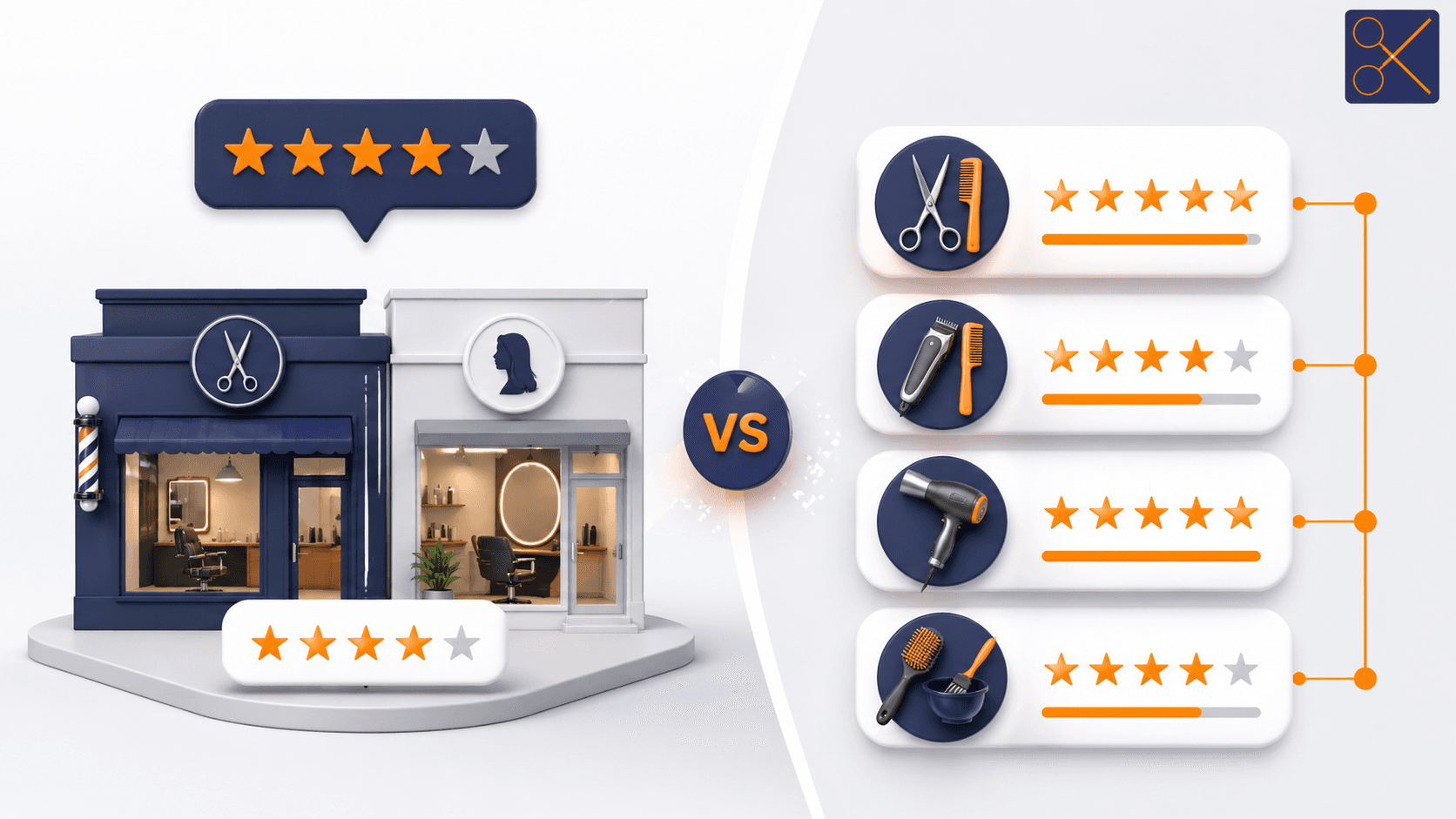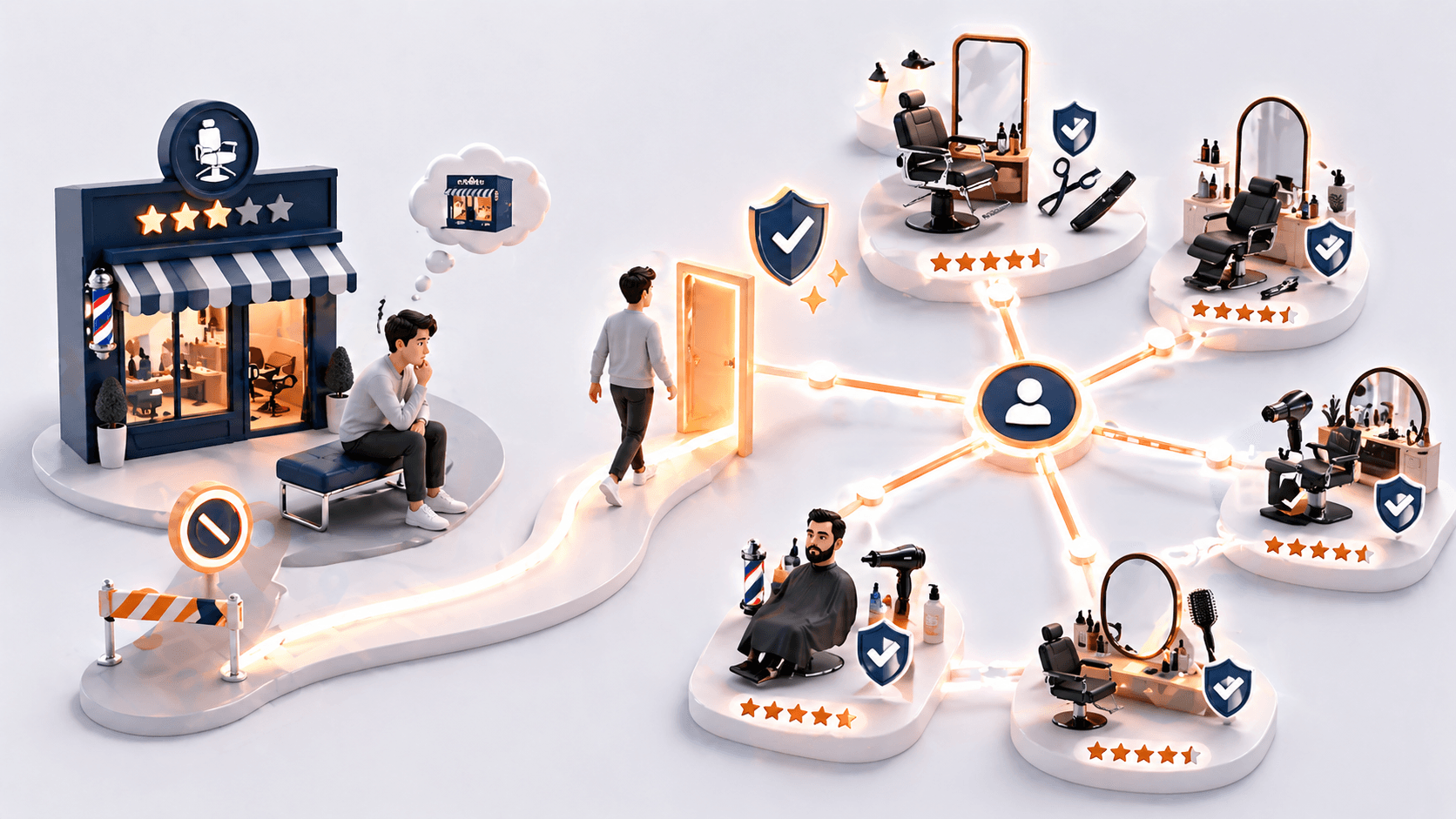
Moving from shop reputation to service-level trust matters because users are not only choosing a business. They are choosing a specific service outcome. A strong brand or a well-known shop can attract attention, but it does not always provide enough clarity for a confident decision. In personal care, trust becomes more useful when it is tied to the actual service being booked.
Why shop reputation still matters
Shop reputation is not meaningless. It often acts as an early trust filter.
A known shop may signal:
- basic reliability
- local familiarity
- professionalism
- social proof
- visual credibility
This can help users narrow their initial consideration set. But it usually does not answer the more specific question that matters next: Can I trust this exact service experience?
That is where general reputation starts to fall short.
Why service-level trust is more precise
Service-level trust helps users evaluate what they are actually about to buy.
That may include questions like:
- Is this haircut consistently well done?
- Is this beard service handled well?
- Is this coloring service worth the price?
- Does the duration match what customers expect?
- Does this provider deliver the kind of result I want?
These are closer to the actual booking decision than a broad shop reputation score.
What gets lost when trust stays too general
When trust is expressed only at shop level, important differences can disappear.
For example:
- one service may be excellent while another is average
- one provider may be highly reliable while another is inconsistent
- some users may love the atmosphere while others care more about technical quality
- general positivity may hide weak outcome clarity
That means users may trust the wrong signal for the wrong reason.
Why this is a platform design issue
This is not just a review problem. It is a platform design problem.
If a platform only collects and presents broad reputation data, it may unintentionally push users toward shallow judgments. If it wants to improve decision quality, it needs to help users understand trust at a more actionable level.
That usually means moving toward:
- service-specific reviews
- clearer review context
- stronger provider visibility
- trust signals tied to actual outcomes
- better expectation framing
Why this improves decisions
Service-level trust improves decision quality because it reduces uncertainty where it matters most.
Users can better understand:
- what they are actually paying for
- whether the service is likely to meet expectations
- what kind of quality signal is relevant
- whether the option fits their risk tolerance
That is more powerful than broad reputation alone.
Why this matters for BarberYou
BarberYou is built around the idea that personal care platforms should support clearer decisions, not just more visible shops. That means trust needs to move closer to the booking reality.
A user choosing a haircut, shave, styling session, or salon treatment needs better guidance than "this place is generally well liked." Service-level trust helps create that guidance.
Shop reputation can help attract attention, but service-level trust is what helps users decide well. In personal care, the strongest platforms will increasingly be the ones that move beyond broad popularity and give users confidence in the actual service they are booking.