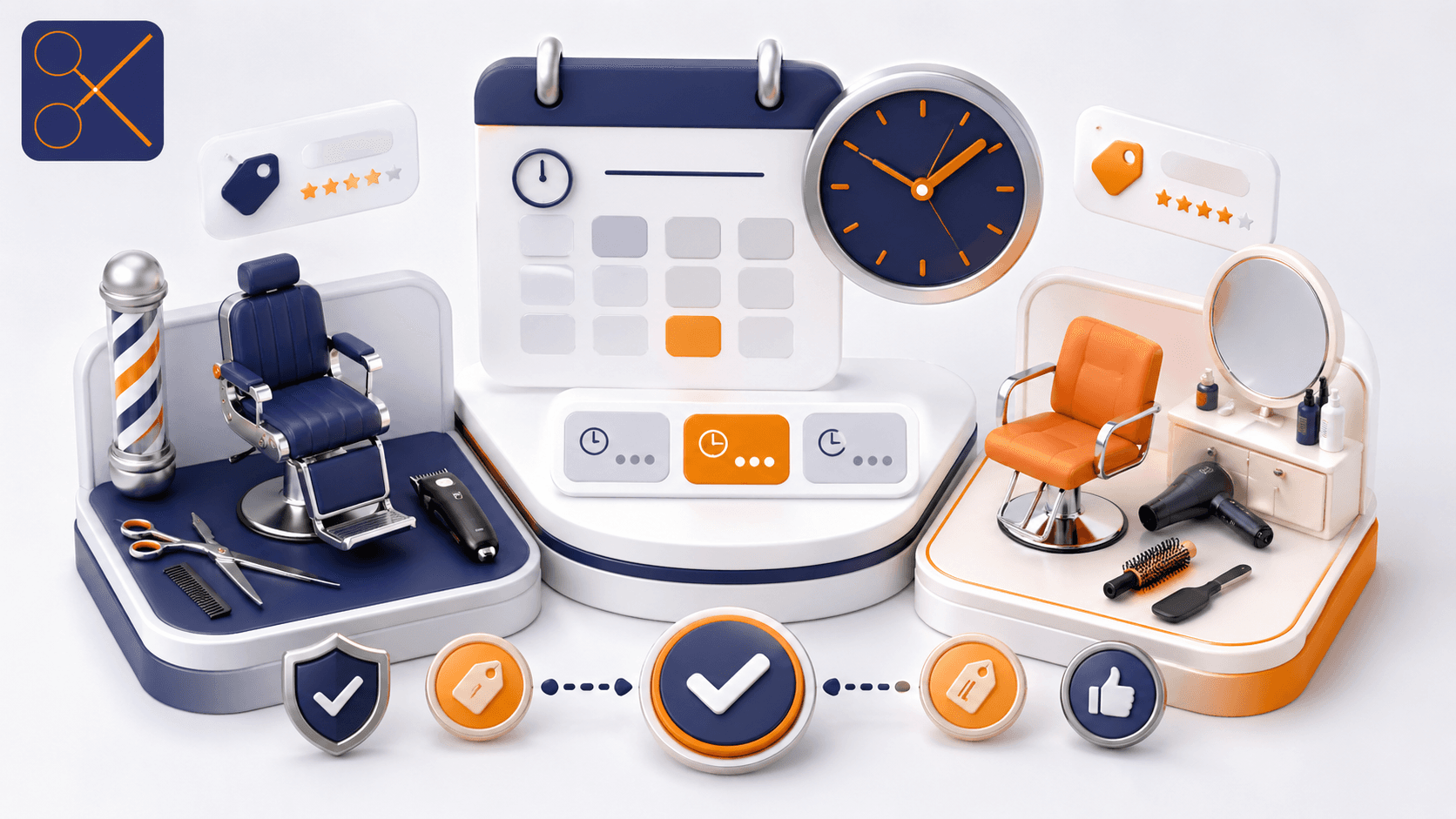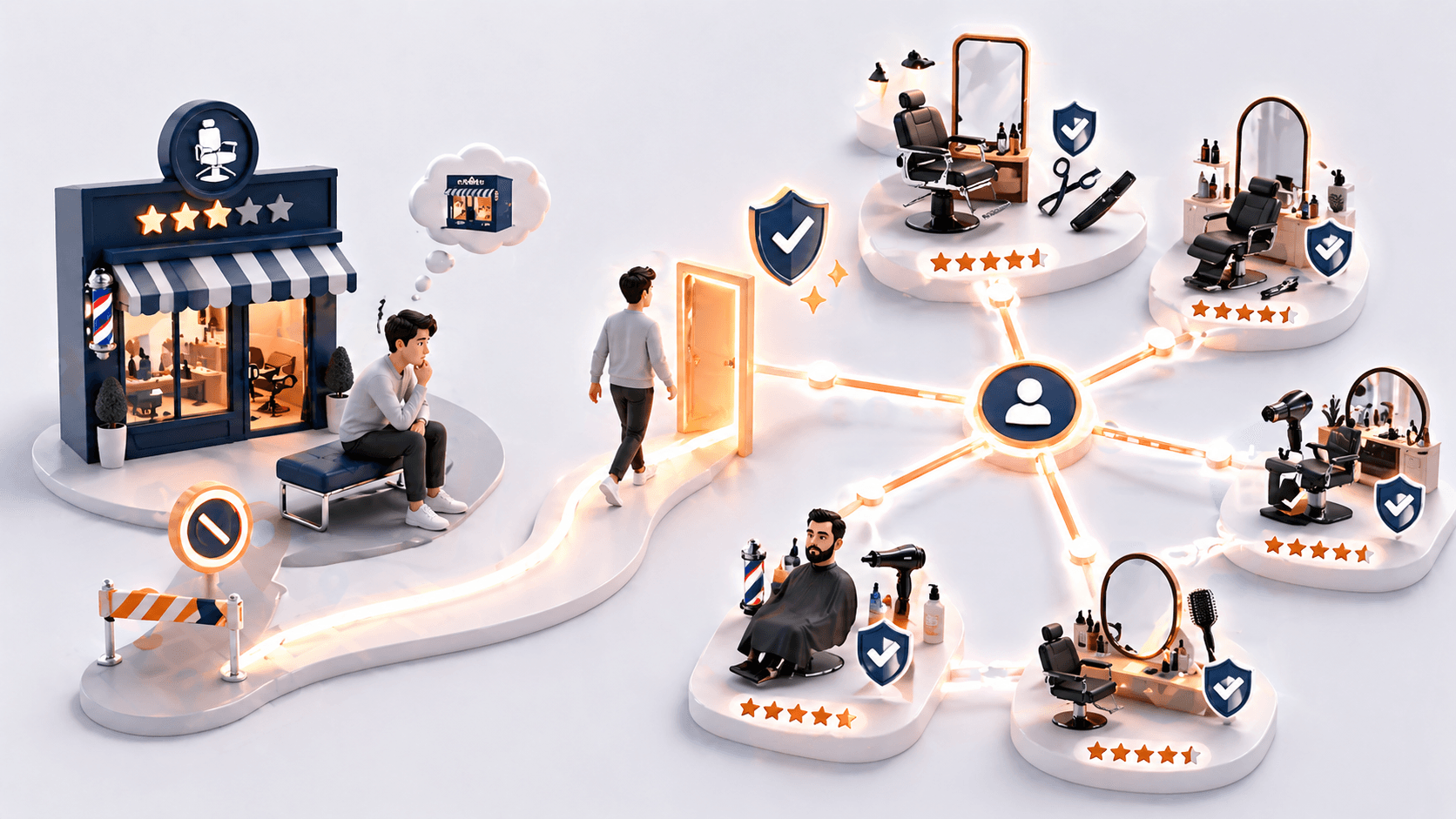
Access matters because real user choice depends on more than the existence of alternatives. People should not feel stuck with one salon simply because other options are too unclear, too risky, or too hard to compare. In personal care, better access means more than visibility. It means making alternatives understandable enough to be genuinely usable.
Why users often stay with the familiar option
In personal care, repeat behavior is common. That is normal. But familiarity is not always the same as satisfaction.
Users often return to the same place because:
- they do not know what else is good
- comparing alternatives feels difficult
- pricing is unclear elsewhere
- booking risk feels high
- they do not want to experiment blindly
This means repeat behavior can sometimes reflect weak market visibility rather than strong market confidence.
What "access" actually means
Access is not just about whether options technically exist on a platform. It is about whether users can realistically evaluate them.
Strong access usually includes:
- visible alternatives
- clear service information
- understandable pricing
- availability insight
- useful trust signals
- enough structure to reduce perceived risk
Without these, a market may look open while behaving like a narrow one.
Why limited access weakens decision quality
When users feel stuck with familiar options, several things happen:
- they compare less
- they explore less
- new providers struggle to break through
- quality differences stay hidden
- better-fit services may never be considered
This is bad for both users and the market itself.
Better access creates better pressure for quality, transparency, and relevance.
Why this matters for fair visibility
A healthier platform should not only help users find what they already know. It should also help strong but less obvious options become discoverable.
That matters because:
- not every good provider starts with strong reputation
- not every visible provider is the best fit
- market quality improves when visibility is not locked to familiarity alone
Access therefore matters for fairness as much as convenience.
Why users need structured alternatives, not just more alternatives
A long list of options is not enough. If users cannot understand how to compare them, they may still default to the familiar one.
That means the real goal is not simply to show more salons. It is to show alternatives in a way that reduces uncertainty.
This often requires:
- clearer service menus
- stronger review context
- pricing transparency
- provider-level clarity
- more useful booking information
Why this is important for BarberYou
BarberYou is built around the idea that personal care should be easier to navigate with confidence. That includes giving users more freedom to make informed choices instead of relying on habit as a substitute for clarity.
A stronger platform should widen practical access, not just visual access.
People should not feel stuck with one salon simply because other choices are too hard to understand. Better access helps users compare more fairly, choose more confidently, and discover stronger alternatives. In personal care, that is not a minor usability improvement. It is a better market condition.